your Step-by-Step Path to Your First Real Rug Sale
No Guesswork Required
- 30-day guarantee: if the pricing formula doesn't change how you price your next listing, I'll refund it. No questions.

My name is Marcy Atwood.
I remember staring at my first rug. Glue was everywhere, the pile was uneven, and the corners curled up off the backing. I had spent $189 on my AK-I tufting gun and $60 on materials,
and had nothing to show for it. My husband walked into the garage, looked at the rug, and asked, “You’re really going to sell this?”
I wanted to cry, because he was asking a question I couldn’t answer.
What changed things came a few months later. My sister-in-law asked me to make a doormat for her lake house. “The Hendersons,” block letters, a little fish underneath. She posted it on Instagram. Three people messaged her asking if I took custom orders. I said yes. I charged $85 each and thought I was overcharging.
I wasn’t.
Then came the real test. A customer messaged asking about a custom dog portrait, 2×3. I quoted $100. She said, “Let me think about it,” and never replied.
That ghost sat in my chest like a stone for weeks. I had two thoughts running on a loop: “People love my work when they see it. Nobody wants to pay real money for it.” Both felt true. Neither one actually was. I just didn’t know that yet.
If you’ve ever made a rug your sister reposted, gotten an inquiry that goes quiet, and wondered if the whole thing is going to end up in the closet next to the bread machine, you know exactly where I was. The craft isn’t the issue. You’re stuck on the part nobody teaches.
This book fixes the part nobody teaches. By the end, you’ll know what your rugs should cost, how to write listings that paying strangers find, and how to ship one without it arriving destroyed. You’ll have a system for turning the garage you already negotiated for into real, recurring income. You don’t need a storefront or a following. You need the business side of the craft you already know how to do.
What You Get
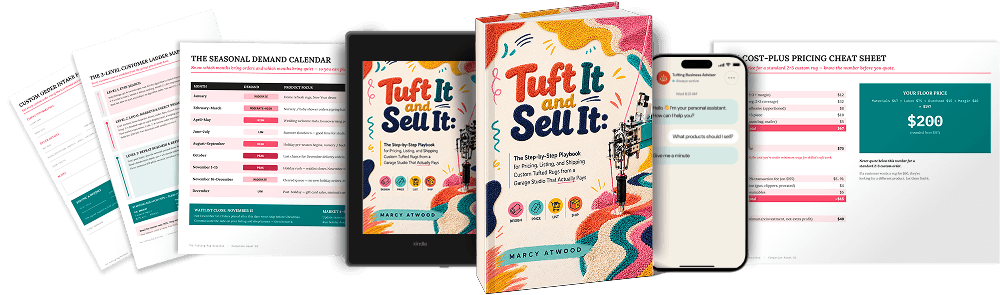
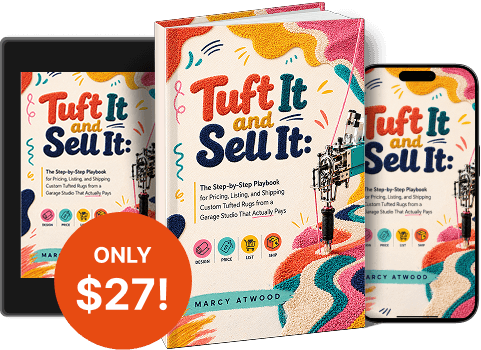
Here’s exactly what comes with Tuft It and Sell It for $27:
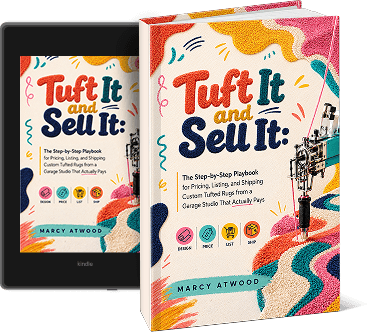
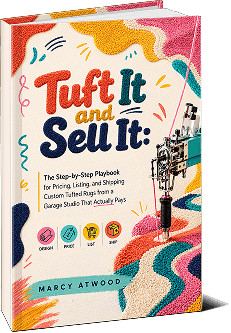
The eBook: Tuft It and Sell It
The complete system from your first listing through building a second income stream. Pricing, photography, Etsy setup, shipping, and the workshop and B2B strategies that break through the ceiling per-rug pricing can’t. Every chapter builds on the one before it.
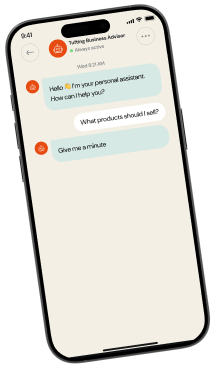
Your Personal Tufting Business Advisor
trained on the pricing system in this book. When you hit a question between chapters, this is where you go.
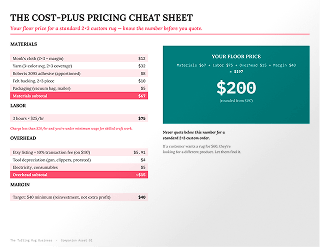
The Cost-Plus Pricing Cheat Sheet
A one-page calculator pre-filled for your most common rug sizes. Materials, labor, overhead, margin. Your floor price for every quote, calculated.
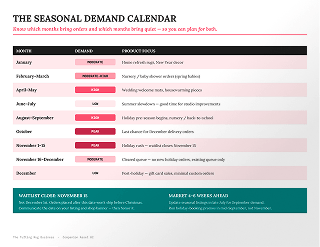
The Seasonal Demand Calendar
Which months bring holiday gift orders and new-year refresh orders, and which months slow down, so you know when to push custom orders and when to fill the gap.
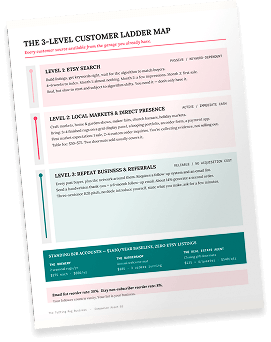
The 3-Level Customer Ladder Map
Every customer source available from the garage you already have: Etsy search, local presence, and repeat/B2B accounts, and why the third level is where a reliable monthly number comes from.
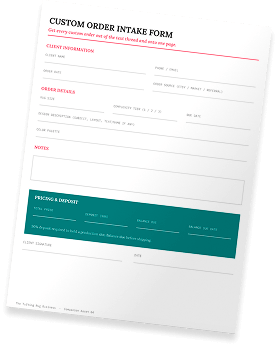
The Custom Order Intake Form (Canva Template)
A branded one-page form for every rug order. Client name, size, colors, due date, price, deposit. Stop orders from living in a text thread.
- 30-day guarantee: if the pricing formula doesn't change how you price your next listing, I'll refund it. No questions.
Stop Losing Money on Rugs You Could Sell
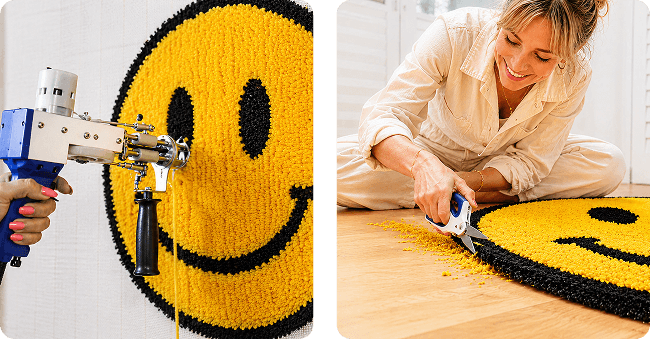
Selling a rug is harder than making one. I already told you about the $100 quote that got ghosted. Two weeks later, a different customer ordered the exact same piece for $175. Same rug. Same materials. Same three and a half hours of labor. One customer ghosted at $100. The other didn’t blink at $175.
The ghost told me something about that customer. It told me nothing about my price. I just couldn’t see the difference yet.
The craft was working fine. What broke me was the gap between two worlds: the tufting community only talks about technique, and the Etsy community talks about everything except tufting. I was stuck in the middle with one question neither side would answer: what is this rug actually worth?
I built the answer myself. A cost-plus formula that accounts for materials, labor, and overhead, not a guess based on what other Etsy sellers charge. I learned which listing strategies brought real customers in, not just inquiries that ghost. I figured out shipping that protected my margins.
By the end of my first year, I’d made $19,400 in rug sales, almost all of it custom orders. I know this works because I lived it.
The First Sale That Means Something
I still think about the woman from Portland, Oregon.
She found my shop on a Thursday night at eleven o’clock. She wanted a custom doormat with her family name and a small pine tree. She read the listing, looked at all five photos, and bought it without messaging me first. No negotiation. No “would you do it for less.”
She just bought it.
Four weeks later she left a review. Three sentences. She said she’d imagined exactly what it would look like, and it looked exactly like that. She hadn’t known it was possible to buy something handmade by a real person that actually matched the picture in her head.
“[…] imagined exactly what it would look like, and it looked exactly like that!”
I sat with that review for a long time. A stranger with no reason to be kind to me had trusted that I’d make what I said I’d make, and I did. That’s what stuck.
That trust is what you’re actually buying when you buy this book: proof that the version of yourself you’ve been carrying around quietly, the one who makes rugs, is real.
You Already Know the Hard Part
You can tuft. That puts you ahead of ninety percent of the people who’ll read this sentence and never own a gun.
Talent isn’t your gap. What you’re missing is the business layer underneath the craft, which means the pricing math, the listing structure, and the shipping setup that turns finished rugs into orders in your inbox.
The money you’ve already spent on this craft isn’t a sunk cost. It bought you the hard part. What’s left is the business layer, which costs $27 to learn.
This book gives you that layer. You’ll see exactly how to:
- Set up your garage so every rug moves from frame to listing faster
- Make rugs look professional in photos, even on your fourth or fifth custom order
- Price every order with a formula that pays your time and protects your margin
- Write Etsy listings that surface for buyers ready to pay full price
- Sell custom commissions, which is where the real money in tufting lives
- Ship rugs without losing profit or getting damage complaints
Every step is built from a mistake I made and the fix I figured out.
- 30-day guarantee: if the pricing formula doesn't change how you price your next listing, I'll refund it. No questions.
About the Etsy Search Results That Scared You
The first time you searched “tufted rug” on Etsy, you probably closed the tab. Hundreds of rugs. Some of them are gorgeous. Some priced at $60 for pieces that would take you ten hours to make. It felt like walking into a room where every chair was taken.
Here’s what those search results don’t tell you. The seller pricing a 2×3 at $60 is either losing money on every order or pricing for an audience they already built on TikTok. Neither one matters to you. You aren’t competing with viral creators. You’re competing for the buyer who searches for “custom dog rug for the living room” and wants someone in the United States to make her one in three weeks.
That buyer isn’t in the saturated search results. She’s in the custom-commission lane, and most of the sellers you saw aren’t even trying to reach her. The book shows you how.
Quiet Money From the Garage You Already Have
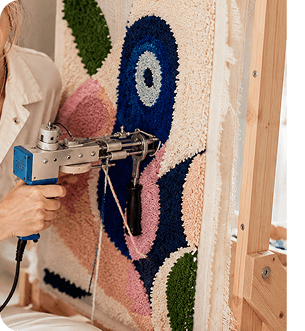
You don’t need to be an influencer, film yourself tufting at 6 a.m. for TikTok, or build a personality brand.
You need orders, which means real customers paying real prices and shipping to real addresses.
The kind of side income that shows up in your account without anyone in your neighborhood knowing you started a business.
Here’s the honest ceiling on custom orders alone: at 15 to 20 hours a week,
you can produce 8 to 10 custom rugs a month. At an average of $175 a rug, that’s $1,400 to $1,750. Good money, and short of the number most people picture when they hear “rug business.”
The book shows you why the real number comes from a second stream stacked on top of custom orders, workshops, repeat B2B accounts, not from making more rugs in fewer hours. Chapter 14 walks through the full arithmetic, line by line.
Note: The figures above are illustrative math based on the per-unit pricing described in the book, not a promise of what you’ll earn. Your results depend on your time, market, pricing, and consistency.
This book gives you:
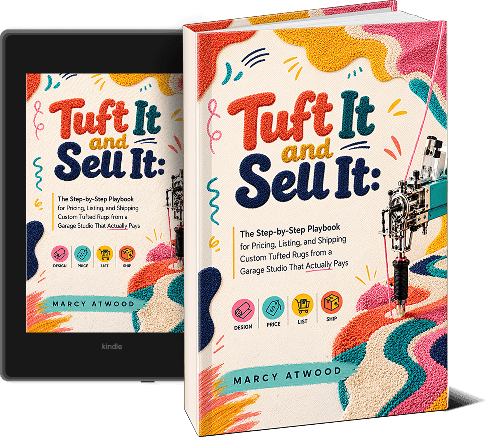
- Workspace instructions that turn your garage into a functional studio
- Techniques that close the gap between "homemade" and "professional"
- A pricing system that values your fourteen-hour custom commissions honestly
- Etsy listings that surface in search results buyers actually use
- A custom-commission process that turns inquiries into deposits instead of ghosts
- Packaging methods that keep your margin intact and your customers happy
- 30-day guarantee: if the pricing formula doesn't change how you price your next listing, I'll refund it. No questions.
Don't Let This Become Another Closet Hobby
Every tufter I know has a version of the same closet. The watercolor set from 2019. The sewing machine your mother-in-law gave you. The bread machine. Each one was a “this time I’m going to do it” purchase, and each one ended up on the shelf next to the last one.
The tufting gun does not have to join them.
You’ve already told two or three people, carefully, that you “make rugs.” You like the way it sounds. You like being the person who makes something. If this goes in the closet, you have to stop saying it. You go back to being the person who just goes to work and comes home.
This book is the difference between the closet and the Etsy deposit. Six months from now, you’ll either have a shop with twelve listings and your first repeat customer, or you’ll have the same pile of rugs and a slightly heavier feeling every time you walk past them.
The Guarantee That Protects Your First Sale
I’m confident this book works if you follow it. Here’s my promise:
If you go through this book, follow the method in Chapter 11 to set up your listings, and don’t get at least one paying customer within 30 days, request a refund through ClickBank, the retailer for this purchase. No questions asked. You either get your first paying customer, or it’s free.
This guarantee is measurable and outcome-specific. You get the path to your first sale, or it costs you nothing.
- 30-day guarantee: if the pricing formula doesn't change how you price your next listing, I'll refund it. No questions.
See Your First Sale and Make It Real

Picture a rug on your frame with the tension correct, the carving clean, and the finish checked. Photographed in good light, listed on Etsy with keywords buyers actually search, and priced with the cost-plus formula. Shipped in a box that protects your margin.
An order comes in from a name you don’t recognize, in a state you’ve never been to. She reads the listing, looks at the photos, and buys it without a single question.
That’s the first one. What happens after it is up to your hours, your market, and how consistently you list. The book shows you how to stack a second stream on top of custom orders so the ceiling on per-rug pricing stops being the ceiling on your income.
Start Your Rug Business Today
Buy Tuft It and Sell It for $27, apply the system, and get your first paying stranger. Make the craft you’ve quietly started telling people about to actually pay.
- 30-day guarantee: if the pricing formula doesn't change how you price your next listing, I'll refund it. No questions.
$27 buys you the business side of the craft you already know.
Earnings note: The $19,400 first-year figure and every other dollar amount in this letter are Marcy’s own results from her own shop, described in the book. They are examples, not guarantees. Income figures depend on effort, skill, market conditions, pricing, and consistency, and results will vary.
1. Your Info
Your Order Info
2. Payment
Your Payment Details
You’ll get an order confirmation and download link by email.